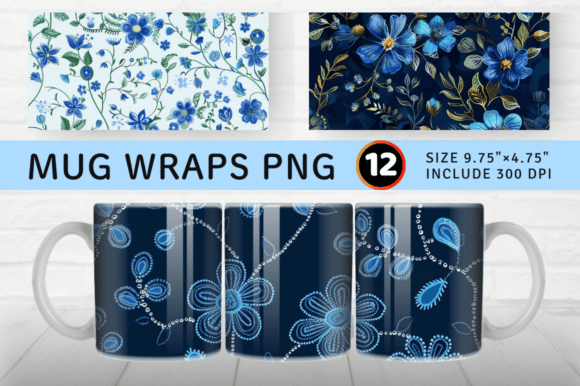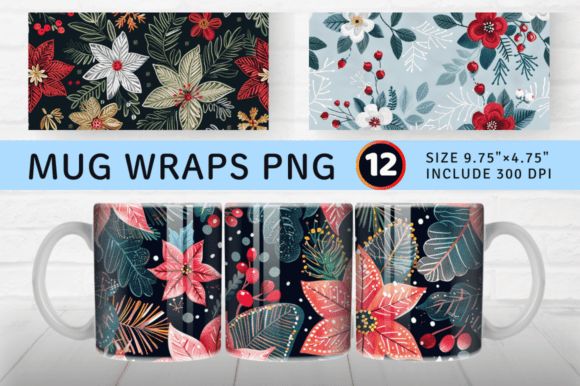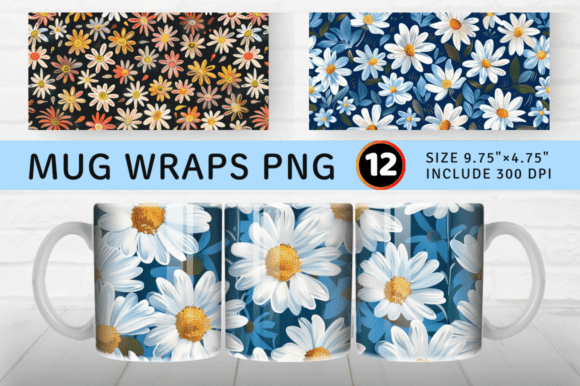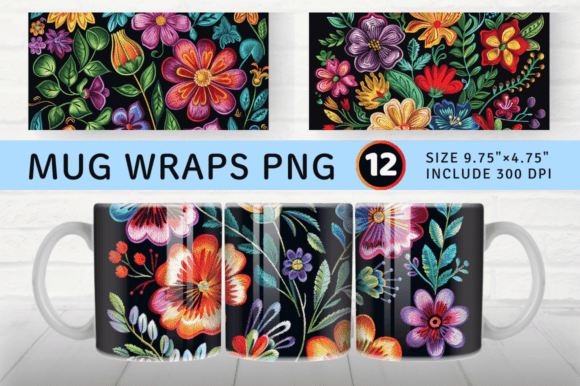
Roses Embroidery Flowers Mug Wrap Sublim: Designer Review
When I first saw Roses Embroidery Flowers Mug Wrap Sublim, I was picking out files for a batch of bridesmaid gifts — delicate tote bags I wanted to finish with a soft, floral accent. The mood of this design hit me right away: it’s quiet, elegant, and has that timeless hand-stitched personality many of my clients ask for. Even though this file is actually a digital download template for sublimation, I immediately wondered how it would translate into real thread. As someone who spends days elbow-deep in stabilizer and test swatches, I need graphics that can survive the leap from screen to hoop.
I grabbed the high-resolution PNG, opened it large on my monitor, and started mentally mapping where satin stitch petals would go and how the layout might shift once it wasn’t wrapped around a straight-wall mug. What follows is my honest, in-the-trenches take on this design — not as a basic product description, but as a working embroidery designer who needs to know if it’s worth the stitch-out time.
First Impressions of a Delicate Rose Pattern
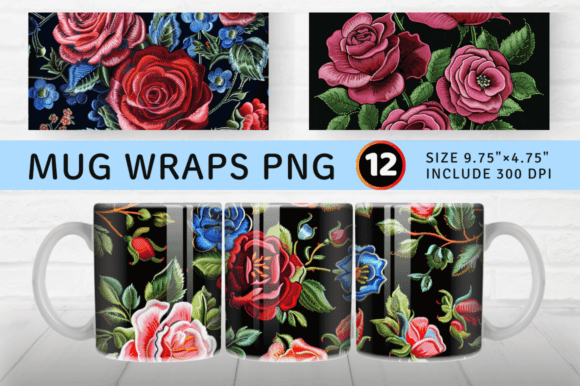
The file comes as a straight-wall mug wrap, meaning the roses and foliage are arranged in a horizontal composition that’s meant to circle a cylindrical surface. Straight out of the zip, the high-resolution PNG is clean and crisp. The roses themselves aren’t overly realistic; they lean into that “hand-embroidered” floral illustration style with layered petals, tiny leaf details, and gentle curves. There’s a subtle vintage charm here — think grandmother’s handkerchief meets modern boutique branding.
I could immediately see this working for projects that need a romantic, garden feel without being loud. The layout is thoughtful: main bloom clusters balanced by smaller buds and a few trailing leaves. Because it’s a wrap design, there’s a natural repetition, but it’s not aggressively pattern-like. As an embroidery design inspiration, the arrangement gives plenty of options for isolating motifs or stretching the art into a decorative border.
One thing I love: the illustration leaves breathing room between elements. In embroidery, that matters. Overly dense graphics often turn into a muddy mess of overlapping thread if you don’t simplify. Here, the generous negative space suggests someone understood that even in a graphic, thread needs room to breathe.
Thinking Through Stitchability: From Paper to Thread
Now, this is where the designer brain kicks in. Roses Embroidery Flowers Mug Wrap Sublim isn’t an embroidery file. It doesn’t include stitch data, and it won’t send a machine humming. It’s a PNG — a beautifully drawn illustration that belongs to the Graphics category. So, if you want to actually stitch these flowers onto fabric, you’ll need to digitize the art (or hire someone to do it).
Before you groan, hear me out: that’s not a dealbreaker. A high-quality, well-drawn graphic can serve as an excellent blueprint for a machine embroidery design. The crisp lines and clear petal divisions make manual tracing or auto-digitizing less of a guessing game. I could see this mapping beautifully to a combination of satin stitch for petal edges, a light fill stitch for the flower centers, and simple running stitch for the stems and leaf veins. If you prefer an appliqué look, the main rose shapes could easily be converted into clean fabric pieces with decorative stitching on top.
Still, I’d strongly advise testing on scrap fabric first. Thread does not behave the way pixels do. The delicate leaf curls that look airy in the PNG might become chunky in a 4-inch hoop if your stitch length isn’t dialed in. Likewise, overlapping petals could create unexpected density hotspots that lead to thread breaks or stiff fabric. When I mentally overlay a hoop size grid on this design, I’d feel most comfortable digitizing it at 5x7 inches or larger for garments; smaller than that, and those fine leaf tips may vanish.
Where This Design Shines in Real-Life Projects
Despite the extra digitizing step, this art has a lot of practical value for the right project. I mentally dropped it onto a cream linen tote bag first — the contrast between natural fabric texture and those embroidered-style roses felt instant. A few of my customers love carrying personalized gifts that look like heirloom handwork, and this design could anchor a very sweet “floral monogram” setup with a single initial in the center.
Here’s where I could see it being used effectively:
- Tote bag design — Stitch a single rose cluster off-center for a boutique look.
- Sweatshirt embroidery — Place a soft rose sprig near the collar or a full wrap-like border along the bottom hem. On French terry, it would feel cozy and expensive.
- Baby embroidery — Delicate enough for a baby blanket corner or a simple onesie chest design, especially in pale pink and sage thread colors.
- Pillow cover or tea towel — Use the repeating elements to create a charming border. Because the original PNG is a wrap, you can stretch the pattern horizontally without sacrificing the natural flow.
- Holiday gifts and wedding items — Think bridal robes, ring bearer pillows, or kitchen towels for shower favors. The design instantly says “thoughtful and handmade.”
For Etsy sellers and small shop owners, this graphic can also work as a printable mockup to preview your finished stitched product before you ever thread a needle. Because the PNG mimics embroidery so well, placing it onto a product photo can help gauge buyer reaction — and honestly, it can increase perceived value when your listing photos look polished.
The Mug Wrap Format Twist – and What It Means for Embroidery
The “straight wall” specification is the most important technical detail you’ll deal with. Roses Embroidery Flowers Mug Wrap Sublim was clearly designed for flat, straight-sided mugs, not curved surfaces. For an embroiderer, that’s both a blessing and a challenge. The straight layout is easy to re-purpose as a linear border on flat items, but trying to wrap it around a curved baseball cap would introduce distortion unless you intentionally arc the digitized design.
If your plan involves a cap or hat, I’d recommend isolating one rose cluster and centering it, rather than forcing the long wrap into a curve. For a tote bag or flat apparel panel, the straight composition is perfect. In fact, I’d argue this file’s greatest strength is as a ready-made border or shoulder-to-shoulder design for things like aprons, table runners, or the front band of a baby bib.
The high resolution also means you could tile the design for a larger digitized panel — maybe a throw pillow where roses cascade down the center. Just be mindful of stitch density. If you tile it too tightly, the fabric can stiffen and pucker. I always test a small tiled section on scrap canvas before committing.
My Tote Bag Test Scenario: A Story Unfolds
Let me walk you through the exact project that pushed me to grab this download. I had a repeat customer who runs a small boutique. She wanted a limited line of spring tote bags — something feminine but not fussy, and importantly, something that looked hand-embroidered, even if I used a machine to produce it quickly.
I pulled up Roses Embroidery Flowers Mug Wrap Sublim and isolated the largest rose group. After digitizing it, I sampled on a medium-weight cotton canvas in a 6x10 hoop, using three thread colors: dusty rose, olive green, and a warm cream. I kept most of the rose in satin stitch with a subtle edge outline, while the leaves got a lighter fill stitch to avoid bulk. The first run? Not flawless — the innermost petal lines blurred slightly because I’d kept the underlay too light. After adjusting the underlay and adding a tiny bit more density, the second stitch-out looked like something you’d find in a high-end craft market booth.
The client loved it. She immediately ordered the tote bags for her shop’s spring collection, and the embroidery added exactly the kind of visual value that makes people stop scrolling on Etsy. That’s the real payoff: a well-chosen graphic, thoughtfully digitized, can elevate a simple product into a finished product customers trust and want to gift.
Cautions and Curveballs: When Not to Use This Design As-Is
I’m not going to pretend this art works everywhere. There are definitely situations where I’d reach for something else, or at least heavily modify my approach.
Small hoop sizes — think 4x4 or less — will struggle with the level of detail. You’ll lose the delicate petal separation, and the rose may read as a blurry blob. If a customer demands a tiny hat patch, I’d simplify the rose to just the outer silhouette and skip the interior details. That may mean ditching the very thing that makes the design lovely, so I’d rather save this for projects where I have at least a 5x7 field to play with.
Dark fabrics are another tricky area. The PNG uses light, airy petal tones. Stitching those same pale threads on a black sweatshirt will look great — but the contrast makes every tiny imperfection obvious. If you miss a single stitch jump or the underlay peeks through, it’ll shout. Thorough test sew-outs on a dark scrap are non-negotiable here.
Stretchy fabrics like thin jersey or performance tees can distort the roses. I’d pair this design only with adequate cut-away stabilizer or use it on woven fabrics that hold their shape. Curved surfaces, as mentioned, will distort the linear flow, so no mugs — yes, ironically — unless you’re actually printing the sublimation transfer onto a straight-wall mug, which is what the file is originally for. For embroidery on cylindrical objects, I’d isolate a single motif and treat it like a patch.
Throwing It on a Sweatshirt, Apron, and Beyond
Beyond the tote, I’ve mentally placed this on several other fabric tryouts. A sweatshirt embroidery with one large rose on the left chest and three smaller buds running down the sleeve felt very current. On a linen apron, I’d use the full wrap as a waistband detail, maybe in a tone-on-tone thread so it stays subtle. For a baby blanket, I’d cluster the roses in one corner and add a satin-stitched name underneath — instant heirloom-quality personalized gift.
If you’re building a craft business that sells at pop-up markets or through Etsy, this design can anchor a strong signature look. Because the art already suggests embroidery, customers will associate your brand with skilled handcraft even before they read your item description. It’s one of those quiet, trust-building details that makes people click “Add to Cart” faster.
Practical Embroidery Notes Every Maker Should Follow
Before you digitize or stitch, run through my checklist. It’s saved me countless bad sew-outs and answered a lot of “why does this look weird?” questions at 2 a.m.
- Test on scrap fabric first. I can’t stress this enough. What looks balanced on screen can reveal thread tension issues or density problems instantly when stitched.
- Thread color contrast. If your fabric is cream, don’t automatically reach for white thread for the rose — it may disappear. A soft blush or antique rose often reads better, even if the PNG uses lighter tones.
- Stitch density. Over-digitizing is the enemy. Those petals don’t all need solid fill; a combination of satin edge and light internal tatami can preserve drape and prevent that cardboard feel.
- Check your hoop size. The original PNG is a wrap; you’ll likely need to break it into sections for larger projects. Ensure your hoop can handle the digitized section without rehooping awkwardly mid-stitch.
- Mock it up. Use the PNG as a printable mockup on a product photo before you commit to production. It’s a quick way to catch layout issues and get client approval.
- License and rights. Since this is a digital download originally sold as a sublimation template, I would absolutely confirm what the commercial embroidery rights are. If you plan to sell finished items or turn the digitized file into a commercial embroidery product, verify that the license allows derivative works. I never assume.
- Stabilizer choice. For woven cottons and linens, a medium cut-away works beautifully. For knits, don’t skimp — use a firm cut-away to keep the rose crisp through wash and wear.
- Frequent washing? A tea towel or baby bib will see the laundry a lot. Check how your thread and stabilizer hold up over 10+ washes. If the stitched version starts to fringe, consider simplifying the design further or boosting stitch density just enough.
Final Designer Takeaway
If I look at Roses Embroidery Flowers Mug Wrap Sublim purely as a graphic resource for embroidery inspiration, it’s a strong yes from me. The composition is clean, the mood is marketable, and with proper digitizing, it can translate into a genuine machine embroidery design that customers instinctively trust. No, it’s not a stitch-ready file, and yes, you’ll need to put in some thoughtful legwork, but the result often outshines aimlessly chosen “instant download” embroidery files that lack this level of charm.
For the small shop owner looking to build a cohesive handmade collection, this design can live across multiple products — tote bags, kitchen linens, baby gifts, and even boutique apparel — while maintaining a consistent brand feel. As a printable preview asset, it also earns its keep in product photography and Etsy listing mockups. Just remember to test, test, test, and always respect the license. When you get it right, the finished piece carries the quiet confidence of real hand-stitching, and your customers will feel that the moment they unwrap your work.