Boho Flowers Embroidery Design: A Designer's Review
I have spent years testing machine embroidery design files before they ever touch a client's garment or land in my shop inventory. When I first opened Boho Flowers in my embroidery software, I felt that quiet confidence you get when a design simply works. It carries that effortless, free-spirited aesthetic that customers gravitate toward, especially the ones browsing handmade markets or scrolling through Etsy listings looking for something that feels personal and warm.
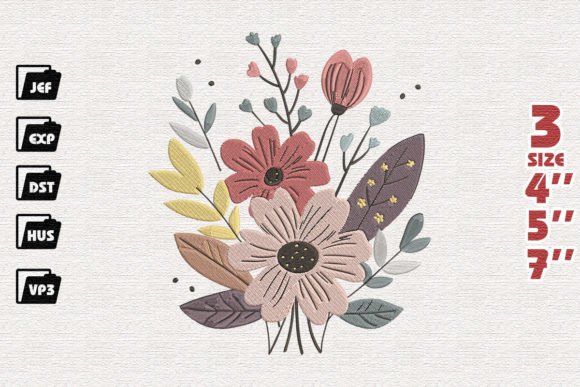
This is not a stiff, overly symmetrical floral. The composition flows with a relaxed, organic rhythm that mirrors the Single Flowers Plants category beautifully, yet it carries enough personality to stand entirely on its own. I immediately pictured it stitched onto a natural linen tote bag, the kind with raw edges and leather straps, the kind that sells out at weekend craft fairs because it looks curated rather than mass-produced.
The Mood Boho Flowers Creates Before You Even Stitch
There is a certain softness to Boho Flowers that reads as approachable and sincere. The floral arrangement has movement, as if a gentle breeze caught the petals mid-bloom. For embroidery designers and small business owners, this matters more than you might think. A design that feels static can sit flat on fabric and fail to catch the eye. One with flow draws people in, makes them touch the stitching, and often leads to the quiet nod of approval that turns into a sale.
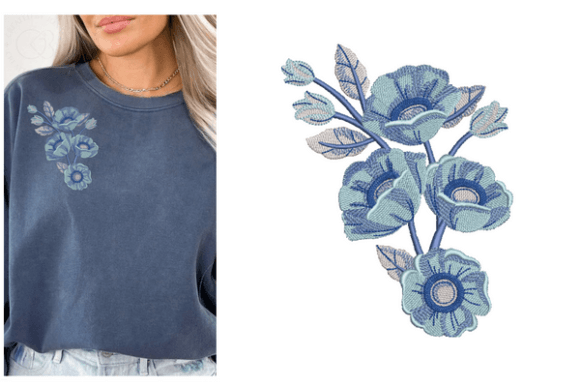
I could see this working wonderfully on a cream-colored sweatshirt, where the thread colors would bloom against the neutral background without competing for attention. It also lends itself to baby items, nursery decor, and personalized gifts where the recipient expects something delicate but not fussy. The boho aesthetic has staying power, and this design taps into that without feeling like a passing trend.
Where Boho Flowers Truly Belongs
After studying the layout and visual weight of Boho Flowers, I mentally placed it on a dozen different products before I even loaded my hoop. Here is where I believe it would genuinely shine in a commercial embroidery or handmade product context:
- Custom apparel such as lightweight sweatshirts, linen blouses, and relaxed-fit t-shirts where the design can breathe
- Tote bags and canvas pouches that benefit from a single statement motif with an artisanal feel
- Pillow covers and tea towels for home decor collections that lean natural and cozy
- Nursery decor including crib sheets, muslin blankets, and soft wall hangings
- Holiday gifts and wedding gifts where the handmade presentation elevates the emotional value
- Embroidered patches for jean jackets, hats, or backpacks, assuming the detail level translates well at a reduced scale
For an Etsy seller or boutique shop owner, Boho Flowers has that giftable quality that photographs beautifully. It would look right at home styled with dried flowers, wooden surfaces, and neutral tones in listing photos. That visual consistency matters when you are building a brand around a certain feeling, and this design delivers on that promise.
Thinking Through Fabric and Project Limitations
No design works everywhere, and pretending otherwise does a disservice to fellow makers. I would exercise caution with Boho Flowers on highly textured fabrics, thick fleece, or anything with a deep nap that could swallow the finer petal details. Thin, stretchy fabrics like rayon jersey or lightweight rib knits may also challenge the stitch stability if the stabilizer choice is not dialed in correctly.
Small hoop sizes could be a constraint depending on the native dimensions of the file. I have not been able to confirm the exact hoop size specification from the available product details, so my firm advice is to check that before purchasing. Scaling a design down too aggressively can compromise stitch density and leave you with thread breaks or a muddled result. The same applies to scaling it up beyond what the digitizer intended.
Dark fabrics deserve a special mention. The visual personality of Boho Flowers leans light and airy by nature. On a black or charcoal base, some of the softer color transitions may lose contrast unless you deliberately adjust your thread colors toward brighter or warmer tones. I always recommend doing a quick test stitch on a scrap of the actual fabric before committing to a finished product, especially for client orders where expectations run high.
Curved surfaces like caps and structured hats can distort the floral layout if the placement is not precise. The organic shape of the design actually helps here, since it does not rely on strict geometric alignment, but positioning still requires care, especially near seams or curved brims.
Practical Designer Notes Before You Sell or Stitch
Over the years I have learned that a beautiful design file is only half the equation. The other half comes down to preparation, testing, and honest evaluation. Here is what I would tell any maker preparing to use Boho Flowers for a real project:
- Test on scrap fabric first. This sounds obvious, but I still meet sellers who skip this step and regret it when a customer returns a garment.
- Check thread color contrast. The boho palette can skew muted. Make sure the petals and leaves read clearly against your chosen fabric background, not just on screen but under natural and indoor lighting.
- Review stitch density. Look for areas where the satin stitch might feel too heavy or the fill stitch too sparse. A quick test stitch reveals this within minutes.
- Inspect small details. If the design includes tiny flower centers or delicate stem connections, confirm they stitch cleanly without thread buildup or gaps.
- Test black and white mockups. This is my personal trick for evaluating tonal balance. If the design still reads well in grayscale, it will likely hold up beautifully in color on a range of fabrics.
- Use proper stabilizer. Your choice here depends entirely on the fabric. A woven tote bag and a stretchy baby onesie demand different support. Do not guess.
- Confirm licensing before selling. If you plan to use Boho Flowers on products for a commercial embroidery business, check that the license permits commercial finished items or resale. The product description does not clarify this explicitly, so reach out to the seller or platform directly.
How Boho Flowers Affects Product Value and Customer Trust
From a business perspective, design selection directly influences how a handmade product is perceived. A finished product featuring Boho Flowers communicates taste and attention to detail. The floral arrangement feels intentional, not generic. When a customer opens a package and finds a thoughtfully embroidered tea towel or a baby blanket with this level of visual warmth, they are more likely to leave a glowing review, share a photo on social media, and return for future purchases.
This is where the distinction between a basic digital embroidery file and a truly usable embroidery project asset becomes clear. Boho Flowers leans firmly into the latter category. It gives the maker a strong foundation to build a product around, rather than forcing them to compensate for a design that lacks presence or clarity.
Brand consistency also benefits here. If you sell under a cohesive shop identity, whether on Etsy, at craft fairs, or through your own website, the consistent use of well-chosen floral designs like this one reinforces your aesthetic. Customers begin to recognize your style, and that recognition builds trust faster than any amount of marketing copy.
Stitching It Into a Real Project
I decided to mentally walk through a full project using Boho Flowers, partly because I believe a design reveals its true character only when you imagine it on something tangible. I pictured a natural cotton apron, the kind a home baker might wear or someone might gift at a bridal shower. The apron is simple, unbleached, with clean lines and a single pocket on the chest.
I would position Boho Flowers slightly off-center near the upper bodice, allowing the stem and leaves to trail downward in a way that feels organic rather than stamped on. Thread color selection would lean warm, soft terracotta tones, dusty rose, sage green, and a touch of cream for highlight. The satin stitch borders on the petals would catch the light subtly, while the fill stitch areas would provide texture without overwhelming the fabric.
The finished apron would photograph beautifully, hang well at a market stall, and feel substantial in the hands of a buyer. That is the kind of practical outcome I evaluate for when I look at a design. Not just how it looks on a screen, but how it lives in the real world after stitching, washing, and daily use.
Final Thoughts From the Hoop
Boho Flowers earns its place in the Embroidery design toolkit for makers who value warmth, versatility, and commercial appeal. It would serve a small shop product line well, support custom apparel orders with confidence, and elevate something as simple as a kitchen towel into a personalized gift that feels genuinely special. The file details such as exact stitch count, available formats, and specific hoop compatibility remain unclear from the product listing, so confirming those technical specifications directly is a necessary step before purchase.
What I appreciate most as a reviewer is how this design understands restraint. It does not try to do too much. It offers a clear, beautiful motif and trusts the maker to bring it to life with their own fabric choices, thread palette, and product vision. That kind of collaborative relationship between the digital design and the hands-on creator is where the best machine embroidery work happens.
If you are building inventory for a craft business, preparing holiday merchandise, or simply want a dependable floral that stitches cleanly and sells itself quietly, Boho Flowers deserves a close look. Test it thoroughly, pair it with fabrics that honor its soft character, and let it do what good embroidery designs do best, make your handmade products impossible to scroll past.